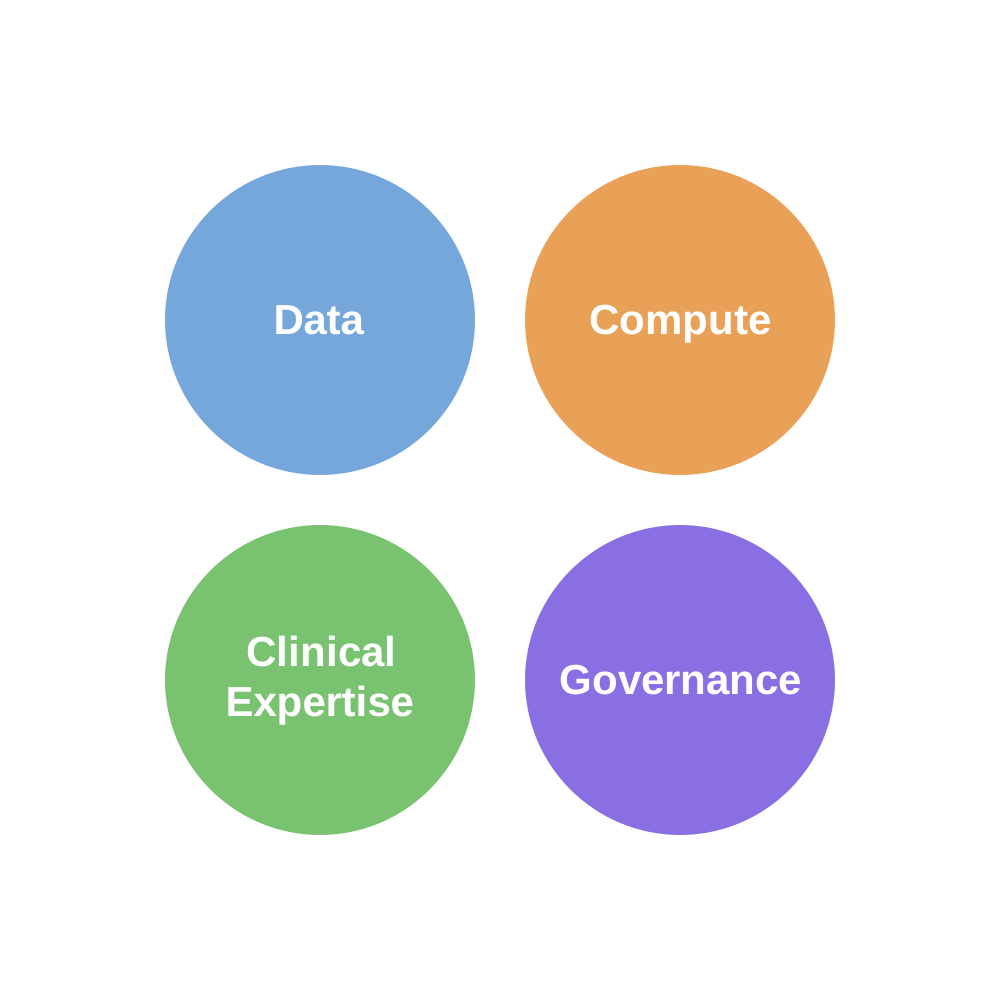
AI health applications do not succeed on algorithms alone. In practice, they stand or fall on four basics: data, compute, clinical expertise, and governance. If one of these is weak, the whole system becomes fragile.
1. Data
Good AI starts with good data. In health, that means data that is accurate, representative, well-labeled, and collected in a way that reflects real clinical practice. More data is not enough. The right data is what matters.
2. Compute
Building and running AI requires serious compute capacity. Training, testing, deployment, and monitoring all depend on infrastructure that is reliable and scalable. Without enough compute, even strong ideas remain stuck as prototypes.
3. Clinical expertise
Healthcare is not a generic domain. Clinical expertise is needed to define the real problem, label/annotate data correctly, interpret outputs, and make sure the application fits into workflows that clinicians and patients actually use. AI without clinical input may look impressive technically, but it is often disconnected from real care.
4. Governance
In health, trust is non-negotiable. Governance covers privacy, security, regulation, accountability, and clear decision-making on how the system is developed and used. Without governance, adoption stalls and risk rises fast.
Conclusion
Right now, many people in health still underestimate what it takes to make AI work. The rise of zero-shot, out-of-the-box models can make it look easy, but real impact still depends on the combination of high-quality annotated data, substantial compute, clinical expertise, and strong governance.